


Geyser not heating? Element vs thermostat: how to tell which one died (South African guide)
Quick answer: A geyser that stops heating has usually lost its element or its thermostat, once the breaker, the isolator, a timer and the plumbing have been ruled out. Water that cools over days, or an earth leakage that trips when the geyser switches on, points to the element. Water that swings between scalding and cold points to the thermostat. An electrician confirms it in minutes with a multimeter, and both parts are stock items that swap in the same visit.
Few household failures are as universally miserable as a cold shower, and in South Africa, where most homes run a 100–200 litre electric geyser, the fix is usually far cheaper than people fear. More often than not, a geyser that stops heating needs one of two parts: the element or the thermostat. Kwikot’s own troubleshooting guide comes down to the same two checks (power at the terminals and cold water means the element, no power at the terminals means the thermostat), after the breaker, the isolator, a timer, a loose connection and the plumbing have been ruled out. Here’s how to tell which one died, what to buy, and what the swap involves.
First, the 60-second diagnosis
- Water never gets hot at all, and it’s been getting cooler over days or weeks: usually the element. Elements burn out gradually (scale build-up makes them overheat), then fail completely.
- The earth-leakage or geyser breaker trips when the geyser kicks in: almost always a burst element leaking current through the scale and water.
- Scalding hot one hour, stone cold the next, no rhythm to it: the thermostat is sticking. It’s the part that tells the element when to switch on and off.
- Water is only ever lukewarm, even after hours: could be either, but check the thermostat’s temperature setting first (someone may have turned it down). If it’s set to 60–65°C and the water still won’t get there, test the element.
An electrician confirms it in minutes with a multimeter: a healthy 3kW element reads around 17–19 ohms (230V squared over 3,000W is 17.6); a dead one reads open circuit (or leaks to the casing).
What to buy
- 3kW Spiral Geyser Element, the standard for most 150–200L household geysers. (A 2kW version suits smaller 100–150L tanks.) The spiral pattern is the common fit for SA flange geysers, match what comes out.
- TSE11 20A Push-in Thermostat, the 11-inch push-in stat used by most SA geysers. Slides into the thermostat pocket next to the element.
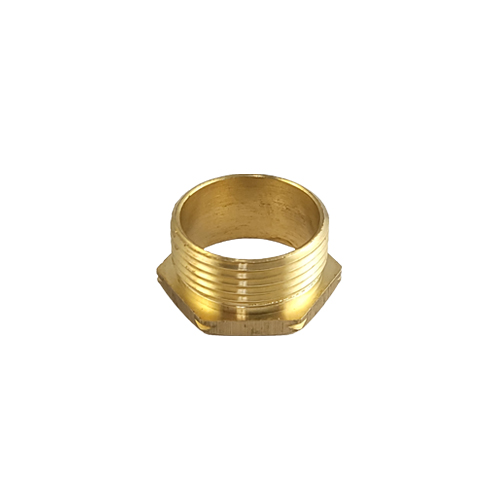
- Worth adding to the cart: a fibre element gasket (never re-use the old one, it’s the seal that keeps 200 litres where it belongs) and brass bushes if the fittings are corroded.
Pro tip: if the element has failed from scale, the thermostat has been working overtime in hot, scaled conditions too. Many electricians replace both in one visit, the thermostat costs little next to a second call-out.
What the job involves (and why it’s not DIY)
Replacing either part means isolating the geyser at the DB board, closing the cold feed, draining the tank (for an element swap), pulling the old part, fitting the new one with a fresh gasket, refilling and re-powering. Done by a pro it’s around an hour’s work.
It is genuinely not a DIY job: it combines 230V wiring, a pressurised hot-water vessel and your home insurance’s conditions. Use a qualified electrician or registered plumber, and if the geyser is still under warranty, check the small print before anyone opens it.
When it’s NOT the element or the thermostat
- No power at the geyser at all, check the isolator switch and the breaker first (and whether a timer is switching it).
- Brown or smelly hot water, that’s the sacrificial anode nearing end of life, a different (and worthwhile) fix.
- Water dripping from the overflow constantly, pressure-control valve, not the heating side.
- A geyser well past 10–12 years that’s burst an element for the second time, start budgeting for a replacement before it retires itself all over your ceiling.
The bottom line
A cold geyser is usually a parts problem, not a geyser problem. Diagnose with the symptoms above, order the element or thermostat (or both) online at liteglo.co.za, delivered nationwide, trade prices for account holders, and have your electrician or plumber do the swap properly.
Geyser Fault Symptoms at a Glance
| What you notice | Most likely cause | What confirms it |
|---|---|---|
| Water slowly got cooler, now cold | Element | Open circuit on the meter |
| Earth leakage trips when the geyser comes on | Element leaking to earth | Reading between element and casing |
| Scalding, then cold, no pattern | Thermostat | Stat does not switch at temperature |
| Only ever lukewarm | Setting, then element | Check the dial before the meter |
| Geyser breaker is off and will not stay on | Element or wiring fault | Electrician, same day |
How to Find the Geyser Switch on the DB Board
Before anyone touches the geyser it has to be isolated, and the first question is always which breaker is the geyser. Three ways to tell.
- Read the labels. A compliant board has each circuit marked. Look for Geyser, HWC, or Hot Water.
- Look at the rating. The geyser is normally the 20A or 25A breaker on its own, separate from the 32A stove and the 20A plug circuits, but do not rely on the rating alone: switch it off, then confirm at the geyser isolator and with a tester that the circuit is dead before anyone touches a terminal.
- Look for the isolator near the geyser. There should be a switch within a metre of the geyser itself, usually in the roof space or on the wall below it. That is the one to switch off before any work, in addition to the breaker.
If the board has no labels at all, that is worth a visit from an electrician on its own; an unlabelled board is a fault waiting for an emergency.
The Parts That Go With the Job
- The element and thermostat, matched to the geyser: 2kW for 100 to 150 litre tanks, 3kW for 150 to 200 litre, spiral or straight to match what comes out. See geyser elements and accessories.
- A new element gasket. Never reuse the old one; a weeping flange is how ceilings get ruined.
- A drip tray and overflow if the geyser does not have one, and a safety valve and vacuum breaker check while the cover is off.
- The isolator and earth leakage, if the board turns out to be missing either. See isolator switches.
More Questions We Get Asked
How long does a geyser element last?
Anywhere from a few years to well over ten, and the difference is mostly water. Hard water scales the element, the scale insulates it, and it overheats and burns out. A sacrificial anode in good condition and a lower thermostat setting both help.
Can I replace the element myself?
The swap is mechanical, but the geyser is a mains appliance on a wet circuit and the work touches fixed wiring. In South Africa it needs a registered person, and your insurer will ask who did it if the geyser ever leaks or fails. Buy the parts, book the electrician.
Why does the earth leakage trip only in the morning?
Because that is when the geyser cycles on after the overnight cool-down. A cracked element leaks current the moment it is energised. Switch the geyser breaker off and see whether the tripping stops; if it does, the element is the fault.
Is it worth replacing the whole geyser instead?
If the tank is rusting, the anode is gone and the geyser is old, a new unit can be the better spend. If the tank is sound, an element and thermostat is a fraction of the cost and an hour of work.
Shop Geyser Accessories




Related Guides
- What Cable Size Do You Need for a Geyser in South African Guide
- Earth Leakage vs Circuit Breaker: Do You Need Both?
- What Cable Size Do You Need for a Stove in South Africa?
- Prepaid Meters vs Smart Meters: What’s the Difference in South Africa?
- Best Electric Heaters for a South African Winter (2026): Cheapest to Run
⚠️ Safety & Compliance Notice
All electrical installations in South Africa must comply with SANS 10142-1 (Wiring Code) and the Occupational Health & Safety Act. Work must be carried out by a qualified, registered electrician. This article is for general educational purposes only. It does not replace professional advice, and Lite-Glo accepts no liability for how this information is used. Always obtain a valid Certificate of Compliance (CoC) for any electrical work.
Need Assistance?
📧 [email protected]
📞 011 781 3100
💬 WhatsApp: 060 322 9674