


Power skirting, explained: hiding plugs, power and data cables in offices and clinics (South African buyer’s guide)
Quick answer: Power skirting is skirting-level trunking that carries plug points, power and data cables along the wall at desk or floor height, no wall chasing, no floor boxes, no cable spaghetti. It is the standard way South African offices, clinics, schools and shops add sockets exactly where people work, and you can buy the full system (lengths, socket covers, elbows, end caps and joint kits) online at liteglo.co.za.
What is power skirting?
Power skirting is a rectangular PVC or steel channel that runs along the wall like a deep skirting board or dado rail. Inside, it has one or two compartments: cables run hidden along the channel, and socket outlets, network points and telephone points mount directly onto its face behind neat socket covers.
The result is power and data exactly where you need them with every cable out of sight and protected.
You will see it in almost every South African office, medical practice, bank, school computer room and reception area, usually as a clean white or grey band running the length of the wall.
Why installers choose it over chasing walls
- No chasing, no dust, no rubble. Adding sockets the traditional way means cutting channels into brick and re-plastering. Power skirting is surface-mounted. It goes up over the existing wall, which makes it the retrofit option for occupied buildings.
- Easy to change later. Offices get rearranged. With power skirting, adding another plug point or network outlet along the run is a straightforward job for your electrician, not a construction project.
- Power and data stay separated. Double-compartment skirting keeps 230V power in one channel and data or telephone cables in the other, with a divider between them. That separation is exactly what network installers specify: it protects the data cables and keeps interference away from your network.
- It protects the cables. Trailing cables get crushed by chairs, kicked, and tripped over. Inside the channel they are protected, a real consideration in clinics and schools.
Power skirting vs floor boxes vs chasing the wall
There are three common ways to get power and data into the middle of a room, and power skirting wins most office jobs for good reason.
- Chasing the wall means cutting channels into the brick, burying conduit and re-plastering. It gives the neatest finish, but it is dusty, disruptive and permanent, which rules it out for an occupied building and makes future changes expensive.
- Floor boxes drop power and data up through the floor to an island of desks. They suit open-plan floors far from any wall, but they mean lifting the screed or floor, and a box in the wrong place after a rearrange is a real headache.
- Power skirting runs the services along the wall, surface-mounted. It is the quickest to install, the easiest to change later, and the least disruptive, which is why it is the default for perimeter desking in offices and clinics.
The honest rule: chase the wall for a brand-new fit-out where you want everything buried, use floor boxes for islands of desks in the middle of a big floor, and use power skirting for almost everything else, especially retrofits.
PVC or steel power skirting?
PVC power skirting is the everyday choice: light, cost-effective, easy to cut and install, and available with the complete family of matching accessories, single compartment and double compartment lengths in white. It suits offices, consulting rooms, receptions and classrooms.
Steel power skirting (like the P801 double-compartment range) is the heavy-duty option: tougher against knocks and trolleys, with a more industrial finish. Workshops, labs, warehouses, technical classrooms and high-traffic corridors are its natural home.
Both do the same job, pick by how hard the environment will treat it.
Single or double compartment?
- Single compartment, power only. Right for a wall of plug points where no data cabling runs, such as a workshop bench or kitchen area.
- Double compartment, power in one channel, data in the other. The default for offices and clinics, where every workstation needs plugs and a network point. If in doubt, choose double: the second channel costs little more and future-proofs the run.
The parts that complete the system
A power skirting installation is more than the straight lengths. Plan for:
- Socket covers, the face plates that frame each outlet on the channel, in 50mm x 50mm and 50mm x 75mm sizes to suit the switchgear you are fitting.
- Joint kits, cover the join where two lengths meet, for an unbroken line.
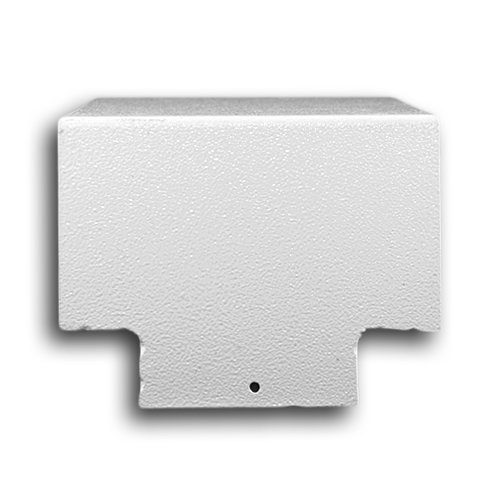
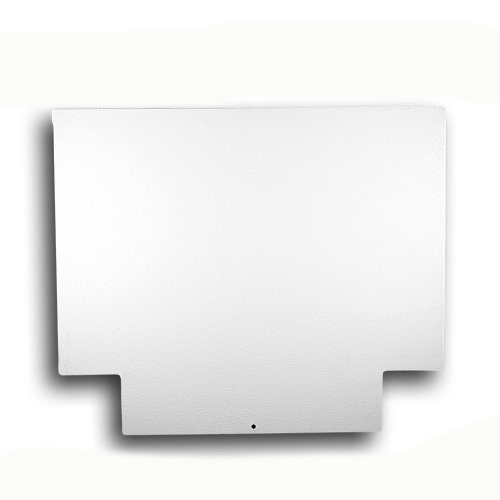
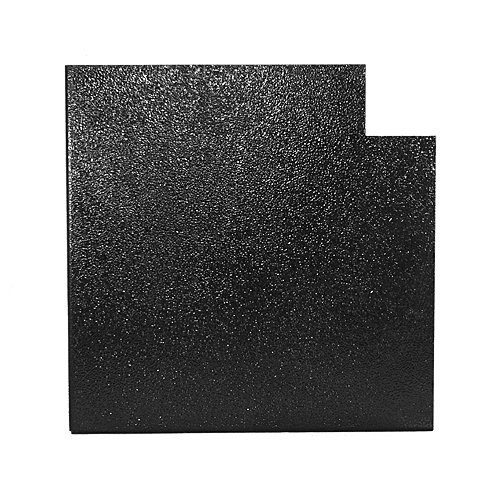
- Elbows, take the run around internal and external corners neatly.
- End caps, close off the channel where the run stops, so you never see an open end.
- Cover clips, hold the snap-on covers firmly along the run.
The practical planning method: measure the total wall run for your lengths, count every corner (each one is an elbow), every run-end (an end cap), every join between lengths (a joint kit), and every planned outlet (a socket cover). Add a length or two of spare, runs are never as simple as the floor plan suggests.
Where power skirting makes the biggest difference
- Offices and co-working spaces, a bank of desks along a wall, each with plugs and network points.
- Clinics and medical practices, equipment, computers and phone points in consulting rooms, with cables sealed away and surfaces easy to keep clean.
- Schools and training rooms, a computer lab wired along the walls, protected from forty pairs of feet.
- Reception counters and banks, card machines, screens and phones powered invisibly.
- Home offices, the same neat, professional finish where a spare bedroom became the workplace.
Installation and compliance
Fixing the channel to the wall is simple carpentry-level work, but the wiring inside it, new circuits, socket outlets, connections to the distribution board, is electrician territory. New fixed wiring must be done (or signed off) by a registered electrician and reflected on your Certificate of Compliance, in line with SANS 10142-1. The right approach for most businesses: have the electrician quote on the complete job, and order the materials yourself online so you know exactly what is going in.
If your run also needs services carried at ceiling or floor level, our guide on cable tray vs cable ladder vs trunking explains how the different containment systems fit together on a job.
Frequently asked questions
Can power skirting be added to an existing, occupied office?
Yes, that is its main advantage. It is surface-mounted, so there is no chasing, no dust and minimal disruption. Most installations happen over a weekend.
Can power and network cables share one channel?
They should be separated, that is what double-compartment skirting is for. Power runs in one channel, data in the other, with a divider between them.
What colour does power skirting come in?
White is the standard for PVC ranges and suits most interiors. Steel ranges offer a more industrial finish.
Is power skirting only for commercial buildings?
Not at all. Home offices and garages benefit from the same neat, flexible finish, anywhere you want several outlets at working height without breaking into walls.
How much power skirting do I need?
Measure the total length of wall the run will follow for your lengths, then count the corners for elbows, the run-ends for end caps, the joins between lengths for joint kits, and every outlet for a socket cover. Order a spare length or two, because real walls rarely match the floor plan exactly.
Buy the complete system online
Every part of the system, PVC and steel lengths, socket covers, elbows, end caps, joint kits and clips, is in the power skirting range at liteglo.co.za, alongside our full trunking range for ceiling-level and wall runs. Real stock, delivered anywhere in South Africa, or click-and-collect from our counter. Contractors and electricians: sign in to your trade account and you will see your price on every item. Planning a fit-out and not sure what to order? Send our team the wall measurements and outlet count, material lists are what we do all day.


⚠️ Safety & Compliance Notice
All electrical installations in South Africa must comply with SANS 10142-1 (Wiring Code) and the Occupational Health & Safety Act. Work must be carried out by a qualified, registered electrician. This article is for general educational purposes only. It does not replace professional advice, and Lite-Glo accepts no liability for how this information is used. Always obtain a valid Certificate of Compliance (CoC) for any electrical work.
Need Assistance?
📧 [email protected]
📞 011 781 3100
💬 WhatsApp: 060 322 9674