


What Solar Panel Size Do You Need for a South African Home? (2026 Guide)
Quick answer: Most South African homes need between 6 and 16 solar panels — that is roughly a 3kW to 8kW solar array — to cover everyday use and run essentials through load-shedding. A modern panel today is a 545W–620W mono module (about 1.1m × 2.3m), so a typical 5kW home system uses around 9 to 10 panels. Size it to your real daily kWh usage and your roof space, not to a round number.
There are two “sizes” people mean by “solar panel size”, and you need both right. The first is the physical size of each panel (roughly 1.1m wide × 2.3m long for a 545W+ module), which decides how many fit on your roof. The second is the power size of the whole array in kilowatts (kW), which decides how much electricity you actually generate. Below we size both in real South African terms — your daily usage, your roof, and your budget.
Solar panel sizes in 2026 — the real numbers
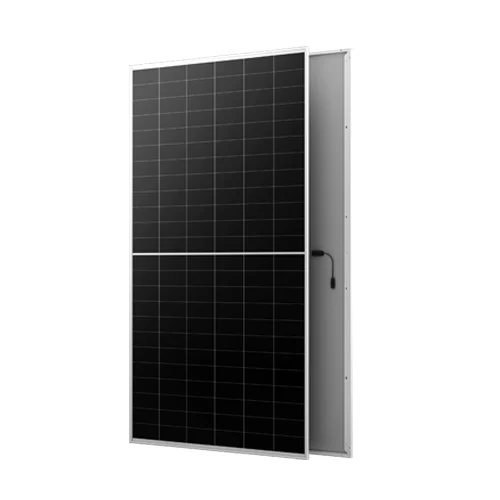
Here is the honest, spec-sheet answer. In 2026 the standard residential solar panel sold in South Africa is a monocrystalline module rated 450W to 620W. Higher-wattage panels mean fewer panels, less roof clutter and fewer connectors for the same power. The table below shows the real panels we stock, their physical footprint and how many you’d need for a typical 5kW array.
| Panel | Power rating | Approx. size | Panels for a 5kW array |
|---|---|---|---|
| JA Solar 460W mono | 460W | ~1.1m × 1.9m | ~11 panels |
| JA Solar 545W mono | 545W | ~1.1m × 2.3m | ~9–10 panels |
| AIKO 605W | 605W | ~1.1m × 2.4m | ~8–9 panels |
| Canadian 605W mono | 605W | ~1.1m × 2.4m | ~8–9 panels |
| JA Solar 620W bifacial | 620W | ~1.1m × 2.4m | ~8 panels |
The pattern is simple: a higher-wattage panel does the same job with fewer modules. Eight 620W panels and eleven 460W panels both make roughly 5kW — but the eight-panel layout needs less roof, less mounting rail and fewer MC4 connectors. On a tight roof, go higher-wattage; on a big roof on a budget, the lower-wattage panels can work out cheaper per watt.
How many solar panels do I need? Size by home and usage
The right number of panels comes from your daily electricity usage in kWh, not your roof size or your neighbour’s system. Find your average daily usage on your municipal bill or prepaid meter (units per month ÷ 30), then match it to the array below. As a rule of thumb in South African sun, each 1kW of panels makes about 4–5kWh on a good day.
Small home or apartment — 3kW array (≈6 panels)
A 3kW array (around six 545W panels) suits a small home, townhouse or flat using roughly 10–15kWh a day. It comfortably runs lights, plugs, TV, Wi-Fi, a fridge and a small load through the day, and with a battery it carries the essentials through a load-shedding slot. This is the entry point for getting off Eskom’s worst hours without a huge roof or budget.
Average family home — 5kW array (≈9–10 panels)
A 5kW array (around nine to ten 545W panels) is the most popular size for a South African family home using 20–30kWh a day. Paired with a Deye 8kW hybrid inverter and a 5–10kWh battery, it powers the whole house in daylight, charges the battery, and keeps lights, plugs, fridge, TV and Wi-Fi running through evening load-shedding. It will not run a geyser, oven and stove off solar alone — those stay on the grid or get their own plan.
Large or all-electric home — 8kW+ array (≈14–16 panels)
A large home, or one trying to run a geyser, pool pump or air-con off solar, needs an 8kW–10kW array — about fourteen to sixteen 545W panels — and a bigger inverter like the Deye 12kW hybrid inverter with 10kWh+ of battery. At this size you’re generating 35–50kWh on a sunny day, enough to slash a heavy bill and run most of the home off the sun. This is where roof space and budget start to matter most.
Shop the solar panels in this guide
These are the panels and modules we recommend most for South African homes — real specs, real stock, ready to ship nationwide.


Panel size vs inverter size vs battery size — getting the balance right
A solar system only works when the three sizes match. Oversize one and you waste money; undersize another and the system underperforms. Here’s how the three fit together for a South African home.
- Panels (the kW you generate): sized to your daily usage — roughly 1kW of panels per 4–5kWh you use. This is what this guide sizes.
- Inverter (the kW you can use at once): sized to your peak load. A Deye 6kW hybrid inverter suits a small-to-average home; a Deye 8kW for an average family home; a Deye 12kW for a large home. Your panel array shouldn’t exceed the inverter’s PV input limit.
- Battery (the kWh you store for load-shedding): sized to how much you need to run when the sun is down. A 5.12kWh lithium battery covers essentials through a slot; a 10.64kWh lithium battery carries a bigger load or longer outages.
A good starting balance for an average home is 5kW of panels + an 8kW inverter + 5–10kWh of battery — generous enough to charge the battery while running the house in daylight.
Solar panels and load-shedding — the South African reality
Solar panels alone do not keep your lights on during load-shedding — you need a hybrid inverter and a battery too. Panels only make power while the sun shines, so without storage the system shuts down the moment the grid drops, day or night (a grid-tied-only setup legally and electrically switches off to protect line workers). For genuine load-shedding cover you need the full chain: panels → hybrid inverter → battery. The panels recharge the battery by day; the battery and inverter carry your essentials through the dark hours and through Stage 6. If your goal is purely backup, you can even start with an inverter and battery and add panels later — but adding panels is what turns a backup system into a money-saving one that pays for itself.
Solar installation safety and the rules in South Africa
A solar PV installation must be designed and signed off by a registered person and issued with a Certificate of Compliance — it is not a DIY job. Solar arrays carry dangerous DC voltages (hundreds of volts even in a “switched-off” string), and a grid-tied or hybrid system ties into your home’s main board and the municipal grid. Get these right every time:
- Use a registered installer and electrician. The DC and AC sides must be installed and certified to SANS 10142-1, and grid-tied/hybrid systems must be registered with your municipality.
- Use the correct solar cable — red and black. PV strings need proper double-insulated solar DC cable in both polarities. Lite-Glo stocks red and black 10mm² solar cable, plus 4mm² and 6mm², by the metre — you need both colours, not one.
- Mount panels properly. Use rated rail and clamps like the KD Solar 4.4m mounting rail so the array survives Highveld wind and Cape storms.
- Get a Certificate of Compliance (CoC). It protects your home, your insurance and your resale value — and your insurer can reject a claim on an uncertified install.
How to size your solar system in 4 steps
You don’t need to guess. Work it out from your own usage in four quick steps:
- 1. Find your daily usage. Take your monthly units (kWh) off your bill or prepaid meter and divide by 30. That’s your average daily kWh.
- 2. Size the panels. Divide daily kWh by about 4.5 to get the kW of panels you need (e.g. 25kWh ÷ 4.5 ≈ 5.5kW → about ten 545W panels).
- 3. Size the inverter and battery. Match the inverter to your peak load and the battery to what you must run when the sun is down.
- 4. Check your roof. Each 545W+ panel needs about 2.6m² of unshaded, north-facing roof. Multiply by your panel count to confirm it fits before you buy.
Frequently asked questions
What size solar panel do I need for a South African home?
Most South African homes need a 3kW to 8kW solar array, which is roughly 6 to 16 panels using modern 545W–620W modules. A small home or flat suits a 3kW array (about 6 panels), an average family home a 5kW array (about 9–10 panels), and a large or all-electric home an 8kW+ array (14–16 panels). Size it to your real daily kWh usage, not a round number.
How many solar panels do I need for a 5kW system?
A 5kW solar array needs about 8 to 11 panels, depending on each panel’s wattage. Using 545W panels you’d need roughly nine to ten; using 620W panels about eight; using 460W panels about eleven. Higher-wattage panels let you hit 5kW with fewer modules and less roof space.
How big is one solar panel?
A modern residential solar panel rated 545W–620W is roughly 1.1m wide by 2.3–2.4m long and about 35mm thick, weighing around 27–32kg. Lower-wattage 460W panels are a little shorter at about 1.1m × 1.9m. You need roughly 2.6m² of clear roof per panel.
How many solar panels run a house in South Africa?
To run a typical South African family home you’ll usually want 9 to 16 panels (a 5kW–8kW array), paired with a hybrid inverter and a battery. That generates enough to power the house in daylight, charge the battery, and run lights, plugs, fridge, TV and Wi-Fi through load-shedding. Heavy loads like geysers, ovens and stoves usually stay on the grid.
Can solar panels run my whole house including the geyser and stove?
Only with a large array and big inverter. Geysers, electric ovens and stoves draw 2,000–4,000W each, so running them off solar needs an 8kW–10kW array and a 12kW+ inverter — plus the roof space for it. Most homes leave these on the grid or use a timer/geyser plan, and size their solar for everyday loads and load-shedding cover instead.
Do solar panels work during load-shedding?
Not on their own. Solar panels only make power in sunlight, and a grid-tied system shuts off when the grid drops to protect line workers. To keep your home running through load-shedding you need a hybrid inverter and a battery as well — the panels recharge the battery by day, and the inverter and battery carry your essentials through the dark.
What size inverter do I need for my solar panels?
Match the inverter to your peak load, not just your panels. A small-to-average home suits a 6kW hybrid inverter, an average family home an 8kW, and a large or all-electric home a 12kW. Your panel array should stay within the inverter’s PV input rating, so size the two together rather than buying panels first.
Ready to go solar? Shop the Lite-Glo solar range
Whether you’re sizing a first backup system or a full 8kW family setup, Lite-Glo has been South Africa’s trusted electrical & lighting wholesaler since 1984. Browse the full solar panel range — JA Solar, AIKO, Canadian and bifacial modules — plus hybrid inverters, lithium batteries, solar cable and mounting, compare real specs and prices, and shop online at www.liteglo.co.za with fast nationwide delivery for homeowners, contractors and electricians.
⚠️ Safety & Compliance Notice
All electrical installations in South Africa must comply with SANS 10142-1 (Wiring Code) and the Occupational Health & Safety Act. Work must be carried out by a qualified, registered electrician. This article is for general educational purposes only. It does not replace professional advice, and Lite-Glo accepts no liability for how this information is used. Always obtain a valid Certificate of Compliance (CoC) for any electrical work.
Need Assistance?
📧 [email protected]
📞 011 781 3100
💬 WhatsApp: 060 322 9674